
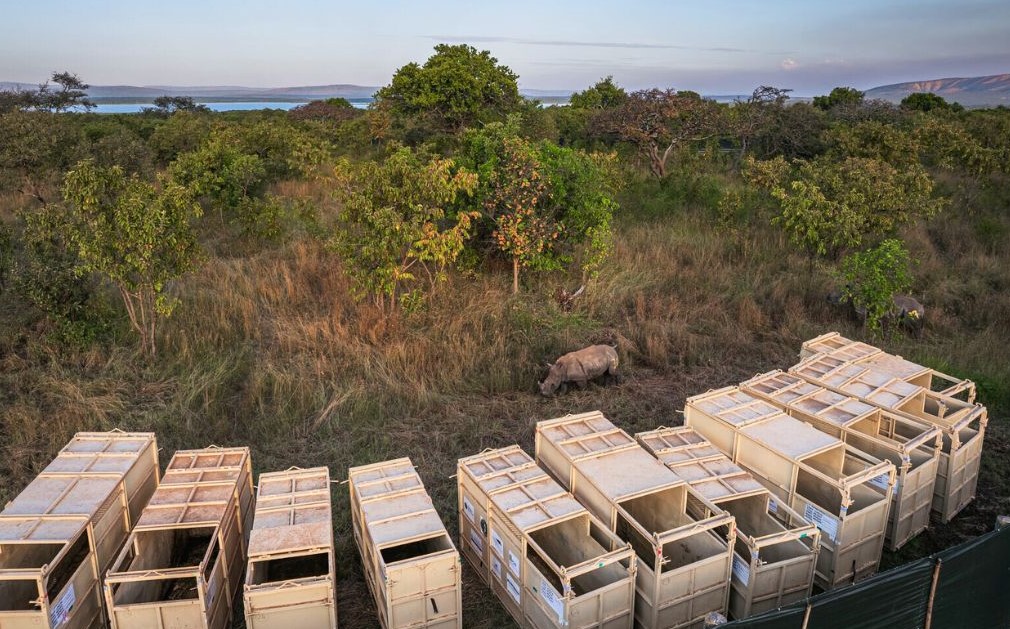
In the golden grasslands of Akagera National Park, something extraordinary unfolded in early June 2025. Seventy southern white rhinos massive, prehistoric-looking beasts with their signature wide mouths and two horns arrived after an epic trek from South Africa. This wasn’t just any wildlife move. It was Rwanda’s largest-ever rhino translocation, a bold chapter in Africa’s fight to save one of its most iconic species. These rhinos didn’t just cross borders; they crossed a continent to find safety, space, and a future in one of the region’s most carefully guarded wild spaces.
An Odyssey across 3,400 Kilometres
Imagine crating up 35 rhinos at a time, loading them onto trucks, then gently crane-lifting those steel boxes into the belly of a Boeing 747. That’s exactly how this operation rolled out in two carefully timed phases first batch on June 4, second on June 7. From South Africa’s Munywana Conservancy in KwaZulu-Natal, the rhinos were flown to Kigali and then driven the final stretch into Akagera. The whole journey clocked in at around two days per group, with veterinary teams watching every heartbeat and breath.
Before the big flight, the rhinos had already had a “soft landing” prep at Munywana. There, they got used to the kind of bush, climate, and even diseases like trypanosomiasis they’d face in Rwanda. It was smart planning months of risk assessments, expert vet work, and old-fashioned teamwork between African Parks, the Rwanda Development Board (RDB), Munywana’s community-private landowners, and donors like the Howard G. Buffett Foundation. By the time the wheels touched down in Kigali, every rhino was accounted for and ready for release.
From a Captive Past to True Rewilding
These weren’t random rhinos pulled from the wild. They came from Rhino Rewild, the former Platinum Rhino breeding operation that African Parks bought in 2023 to rescue more than 2,000 animals roughly 15 percent of the world’s entire southern white rhino population. The goal of the bigger Rhino Rewild Initiative? Spread them across safe, well-managed parks so the species isn’t wiped out by poaching hotspots in southern Africa.
The 70 newcomers join 41 rhinos already thriving in Akagera, descendants of the 30 that arrived in 2021 from South Africa’s Phinda reserve. That first group didn’t just survive—they grew, proving the park’s mix of savanna, wetlands, and strong anti-poaching patrols is perfect rhino real estate. Now Akagera’s white rhino count sits at a healthy 111, giving the species a vital new stronghold in East Africa.
Why Rwanda? Why Now?
Southern white rhinos were once everywhere across sub-Saharan Africa. Colonial hunting and later poaching epidemics nearly finished them off. Today the International Union for Conservation of Nature lists them as “near threatened,” with around 17,000 left. Poaching still claims hundreds every year 586 in 2023 alone, up four percent from the year before. South Africa holds most of the population, but the pressure there is relentless.
Rwanda offers something different: stability, serious investment in conservation, and a park managed since 2010 by African Parks in partnership with the RDB. Akagera’s 1,122 square kilometres of rolling hills, acacia woodlands, and papyrus swamps give these rhinos room to roam, breed, and become wild again. It’s also perfectly placed for future expansion across East and Central Africa. As one project manager put it, “Akagera can potentially hold significant numbers of white rhino… Rwanda’s location on the continent is also ideal for potential future expansion.”
A Win for Wildlife, Tourism, and Communities
Jean-Guy Afrika, CEO of the Rwanda Development Board, called it historic: “This milestone reinforces our dedication to strengthening Rwanda’s protected landscapes and enhancing the country’s appeal as a destination for conservation-based tourism.” Peter Fearnhead, CEO of African Parks, echoed the cautious optimism: “The arrival of these rhino to Akagera is just the beginning… with a dedicated park management team, they have a real opportunity to thrive.”
Veterinary crews are still on round-the-clock watch, making sure the new arrivals settle in without stress. Early reports? All good. The rhinos are already exploring their new territory, grazing on the same grasses their ancestors once knew.
Looking Ahead More than Just Numbers
This isn’t a one-off feel-good story. It’s part of a 10-year plan to rewild thousands of rhinos and restore the ecosystems they help shape by grazing, spreading seeds, and even creating paths that other animals use. Every rhino that makes it here strengthens the meta-population and takes pressure off overcrowded or high-risk areas in South Africa.
For visitors to Rwanda, the payoff is immediate. Akagera already delivers the full Big Five experience, and now its rhino numbers make game drives even more unforgettable. Families, photographers, and conservation travellers can witness these gentle giants in a landscape that’s been brought back from the brink thanks to smart partnerships, serious funding, and pure determination.
The plains of Akagera are rumbling again with the heavy footsteps of rhinos. Seventy new arrivals have turned possibility into reality. In a continent where wildlife news is too often about loss, this is a loud, clear message of hope: with the right effort, Africa’s giants can not only survive they can thrive in new homes where they belong.